


- Home
- Our Products
- MURANOKAJIYA
- MURANOKAJIYA × Oyanagi Sangyo Hoonoki (Japanese Magnolia) Cutting Board
MURANOKAJIYA
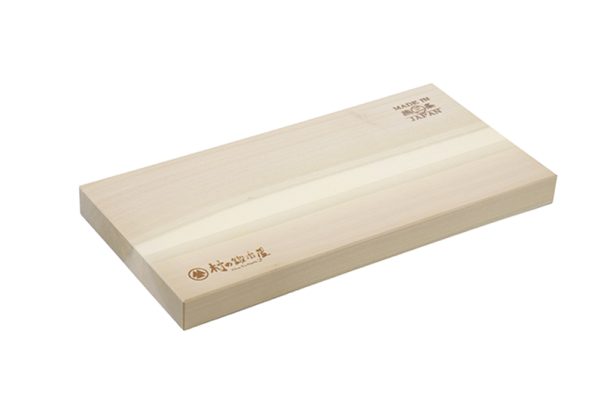
MURANOKAJIYA × Oyanagi Sangyo Hoonoki (Japanese Magnolia) Cutting Board

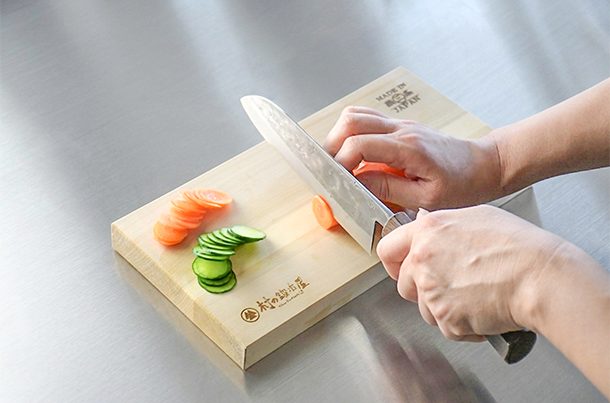
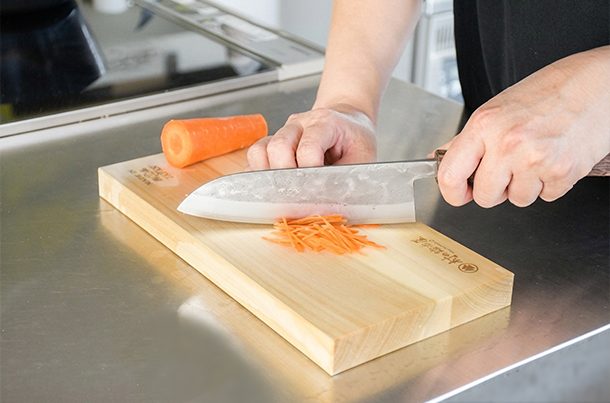
Protect Your Knife. Enjoy Every Cut.
A cutting board is something you use every day, so it deserves just as much attention as your knife.
The cutting performance of a knife is greatly influenced by the cutting board beneath it.
That’s why we recommend a cutting board made from Japanese Magnolia (Hoonoki).
A good knife deserves a good cutting board.
Protect your valuable knives while enjoying a comfortable cutting experience that makes everyday cooking more enjoyable.
Gentle on Knife Edges
Japanese Magnolia has the ideal balance of softness and resilience, providing a gentle cutting surface that reduces impact on the knife edge.
Because it helps preserve sharpness, it has long been valued by professional chefs and craftsmen who work with fine blades.
Pleasant Cutting Sound
One of the unique charms of Japanese Magnolia is the satisfying sound it produces.
Every slice creates a light, pleasant “tok-tok” sound that makes cooking even more enjoyable.
Japanese Magnolia is also sometimes used for making wooden xylophones because of its excellent acoustic properties.
Water-Resistant and Durable
Compared to many other woods, Japanese Magnolia naturally contains oils that help it shed moisture more easily.
With proper care, it will provide years of reliable use.
A Wood Traditionally Paired with Blades
Japanese Magnolia is a broadleaf tree native to Japan.
For centuries, it has been used for Japanese sword scabbards and handles because it protects blades from rust, absorbs excess moisture, and minimizes damage to the edge.
These same qualities also make it an outstanding material for cutting boards.
Double-Sided Design
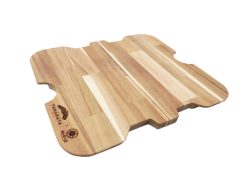
The front side features both the MURANOKAJIYA logo and the Made in Japan – TSUBAME-SANJO mark.
The reverse side is plain, allowing you to use each side separately for different ingredients.
Made by Oyanagi Sangyo (Sanjo, Niigata)
Founded in 1926, Oyanagi Sangyo has been manufacturing high-quality wooden kitchenware in Sanjo, Japan, for nearly a century.
The company specializes in creating kitchen tools from natural materials such as wood and bamboo, preserving traditional Japanese craftsmanship while developing products for modern kitchens.
Their philosophy is to create tools that become more comfortable and beautiful with years of use.
Care Instructions
Before Use
Before each use, thoroughly wet the surface of the cutting board with water.
This helps reduce food odors and staining while making cleanup easier.
After Use
Wash the board promptly with water or warm water after use.
Dry thoroughly before storing.
If deeper cleaning is needed, pour hot water over the surface or use a kitchen-safe bleach.
After using detergent or bleach, rinse thoroughly with clean water.
Do not use a dishwasher or dish dryer.
Specifications
- Size: Approx. 300 × 150 × 24 mm
- Weight: Approx. 522 g
- Material: Japanese Magnolia (Hoonoki)
- Made in Sanjo, Niigata, Japan
Because natural wood is used, grain patterns and color may vary from piece to piece.
Frequently Asked Questions
Q. There are dark streaks in the wood. Is this a defect?
A. No.
Japanese Magnolia is a natural material, and dark lines may appear where the tree’s vessels (which carry water and nutrients) are located.
These are natural characteristics of the wood—not mold or decay—and are completely safe to use.
Q. What should I do if the surface becomes scratched or stained?
A.
Over time, knife marks, stains, and discoloration may appear.
Simply use a cutting board scraper or fine sandpaper to lightly remove the surface layer.
Fresh wood will be exposed, allowing you to continue using the board comfortably for many years.
Q. Should I disinfect the board with boiling water or bleach after every use?
A. No.
For everyday use, washing with water or warm water and allowing the board to dry thoroughly is sufficient.
Hot water is recommended after:
- Cutting raw meat, poultry, or fish
- When odors remain
- Whenever extra sanitation is desired
Kitchen bleach is recommended when:
- Dark stains or discoloration appear
- Frequently preparing raw meat or fish
- Preventing mold growth
Always rinse thoroughly with clean water after using detergent or bleach.
Related Products
OUR PRODUCTS
OFFICIAL YOUTUBE




Copyright © Yamatani Industry Co.,Ltd.